
R&D project at Axis Communications
I improved and simplified the Panoramic Install…
… by designing an interface that maps the camera to the physical world. I took a complicated physical setup and turned it into an intuitive digital experience.
- UX Research
- Interaction Design
- Product Strategy
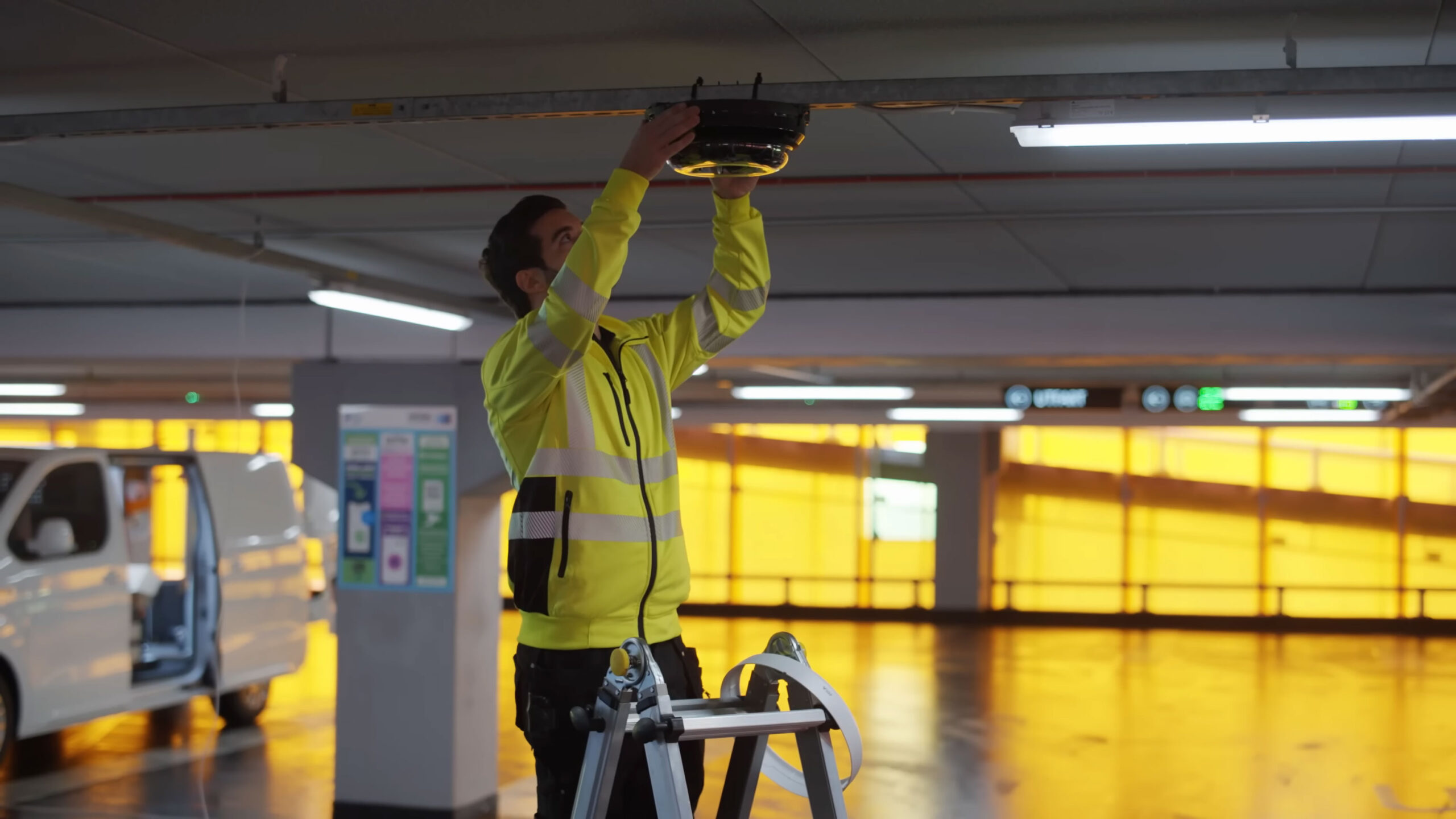
Axis video: Informational video about the P37 camera showcasing the simple installation process
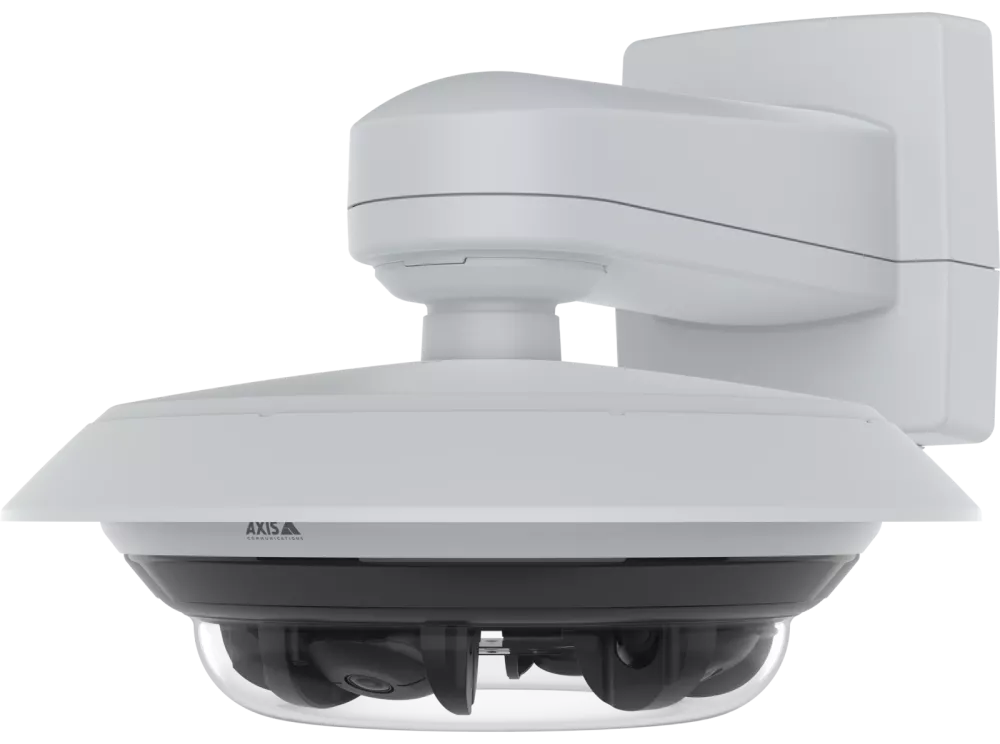
Context of the project
The P37 series, is a panoramic surveillance camera with four independently steerable lenses and onboard AI analytics. This is the first system in the Axis portfolio that offers remote motorized control of each sensor, along with intelligent object detection, classification, and tracking in real time.
My Role As part of the R&D innovation team, was to design this first-of-its-kind interface. My goal was to build a setup experience that felt natural, worked well remotely, and actually made sense in the field.
Challenges that needed to be solved
Before this, installers had to physically touch the cameras to position them during installation or readjustment. Motorized lenses opened new doors, but created new problems:
- You couldn’t easily see where a lens was pointing
- Views often overlapped or crashed into each other
- There was no visual guide to help with placement
- Everyone had different ways they liked to adjust lenses
We needed to make remote alignment clear, visual,
and take the guesswork out of it
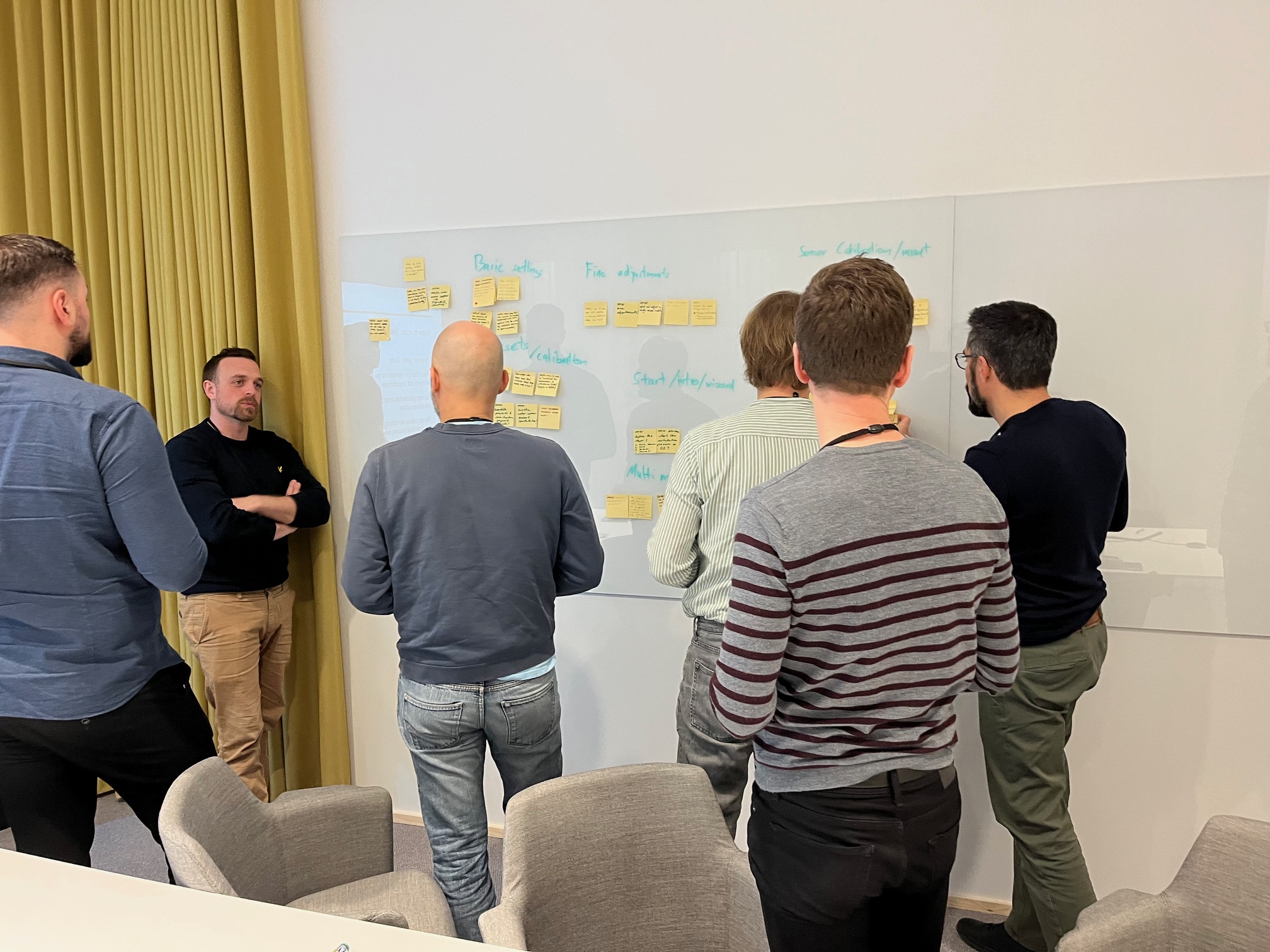
I held a ideation workshop with the R&D team.
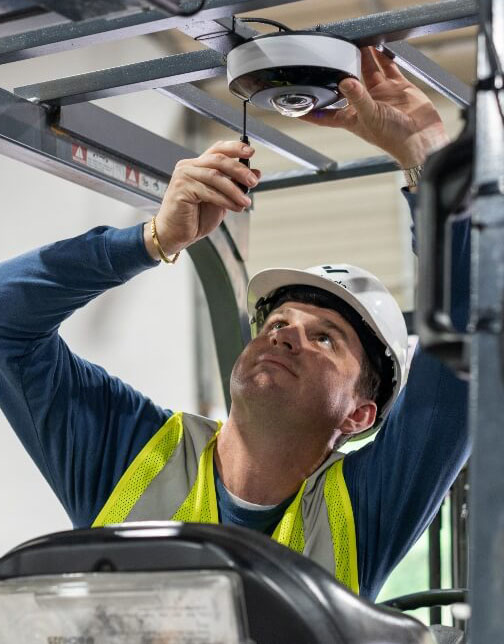
Field research: Installation observation
Field research
I interviewed installers, security staff, and sales engineers. I also dug into installation reports, support logs, and data from older models. A few patterns stood out:
- People used the “group view” to guess where lenses were aiming
- Bad alignment of the lenses often looked like a broken camera
- Users wanted more than one way to control things
Installer Interviews
We conducted in-depth interviews with partners in key markets.
“We’d love a way to understand where each lens is physically pointing, especially when testing angles in large spaces.”
“Clearly numbering the sensors makes it much easier to stage and install multiple units.”
“We need a visual link between the overview map and the specific camera feed.”
“The group view is all we really have to ensure we’re getting an area fully covered”
Design Goals
- Help users understand how each sensor connects to the physical space
- Prevent lens collisions with clear boundary indicators
- Offer multiple ways to control sensor movement
- Reinforce trust through recovery options and orientation cues
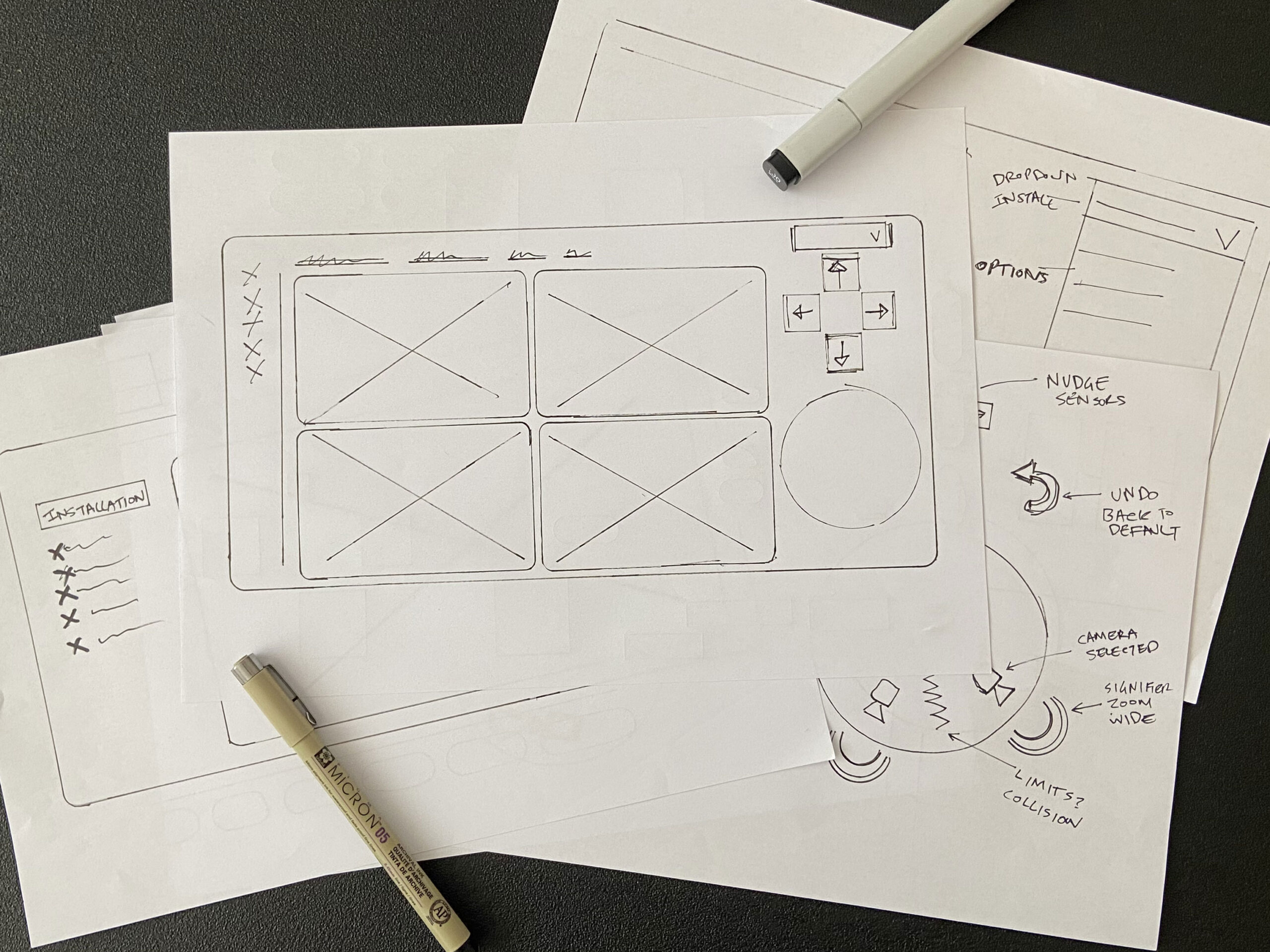
Early sketches focused on simplifying the install flow.
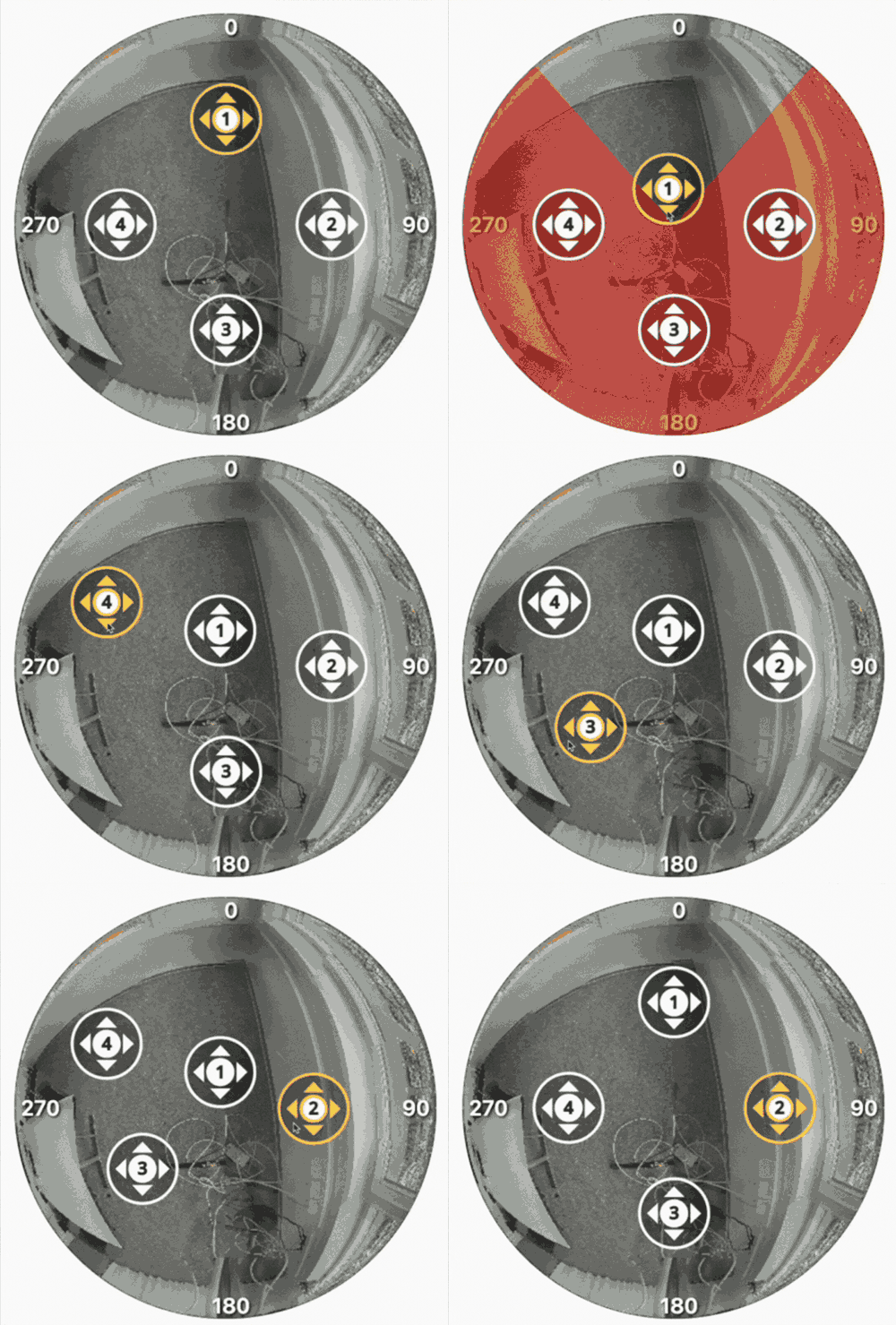
Camera collision limits.
Early Concepts
My early sketches focused on cleaning up the install flow. I was in charge of the concept and wireframing phase, making sure we only showed users what really mattered.
A big part of the solution was an “orientation map”, a fisheye view where crosshairs showed exactly where each lens was looking.
Installers could adjust lens positions in three ways:
- Clicking inside the live stream
- Using arrow controls
- Dragging crosshairs inside the map
We originally hoped to show the actual zoom width, but technical limits meant we had to focus on movement boundaries and physical collision warnings instead.
Prototyping
We built a digital fisheye map to visualize how the lenses moved. Each crosshair is tied to a specific sensor ID. The red arcs show where the physical limits are.
Outcome
This was the first interface for the multi-sensor line that let installers quickly aim, zoom, and set up views in real time. It supported Axis’ move toward flexible, AI-driven platforms and set the standard for future remote tools.
What I Learned
Designing for pros in the field means prioritizing speed, accuracy, and easy recovery. Being on the R&D team reminded me how vital clear feedback is when you’re building tools for high-pressure environments. This project sharpened my focus on how people behave and how to guide their decisions in the physical world.
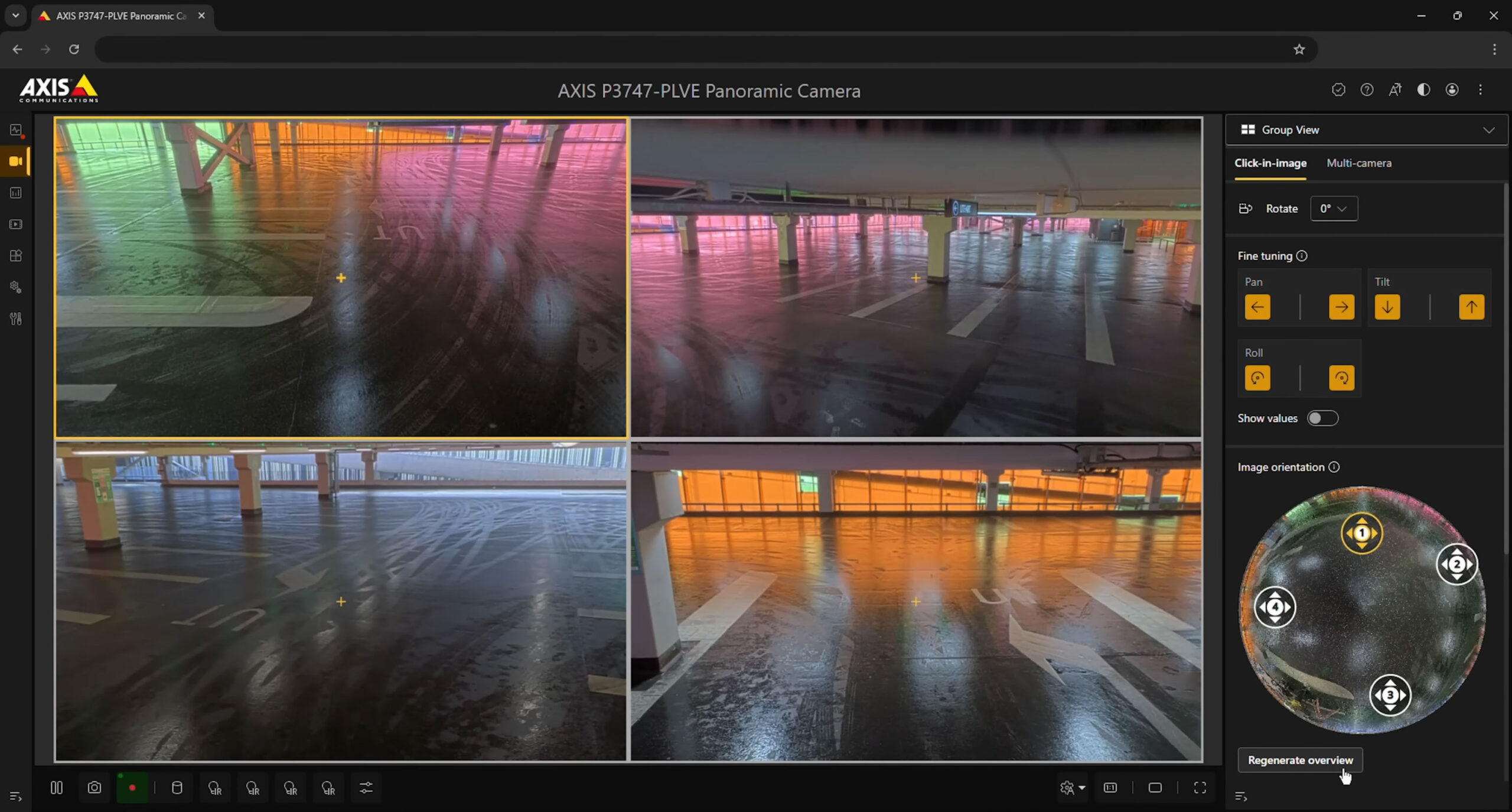

The AXIS P37 Panoramic Camera series recently won the 2025 Security Today New Product of the Year Award for Video Surveillance Cameras – IP!